
Infant diarrhoea


One of the most common symptoms of tummy troubles is diarrhoea – watery stools that are different in appearance and frequency than those your baby has had before. (This is an important detail, since many young infants, especially breastfed babies, normally have thin or watery stools.)
Most infectious diarrhoeas are caused by viruses that tend to be more common in the summer but can come along at any time. These infections usually last several days, but you just have to give it time.
Keep your baby hydrated
The key is to give your baby plenty of fluids, even if he doesn't have much of an appetite or seem very thirsty. Continue to feed him if his diarrhoea is mild. Give him small portions of bland foods that contain the fibre pectin throughout the day. Try apple sauce, rice, bananas and mashed potatoes. If you're formula feeding, add 30 ml or more of water to the mix, diluting the formula slightly. Avoid teas, which don't have the necessary salts, as well as fruit juices – they can actually increase fluid loss because of their high salt content. If your baby's stools are particularly frequent and watery (hourly, for example, and soaking through the nappy), you may need to give him 30 to 60 ml of a commercial electrolyte solution every hour or two for a day before going back to his regular feeding pattern.
Call for assistance
If his diarrhoea isn't getting better, check in with his healthcare provider. Giving your baby any diarrhoea medicine without very explicit directions from an experienced healthcare provider can be dangerous. These treatments can cause serious bowel stoppage and sedation.
FYI: Diarrhoea almost always creates skin irritation in the nappy area. Change your baby frequently and apply an ointment to the area – or use a nappy with petroleum embedded in the lining – to protect his skin from the burning properties of fast-running stools.
When to call
It's hard to know when to contact the healthcare provider, but if your child is exhibiting any of the following symptoms, call his provider immediately:
Minor stomach complaints are typical among young children. It's important you understand how to manage them at home to avoid visits to Casualty, hospitalisations and prolonged discomfort. Your little one will soon feel better!

Read more about Baby

Health review: 9-month-old baby check-up
Find out what to expect during your baby's 9-month check-up, which is typically performed by your local general practitioner or paediatrician.
Read more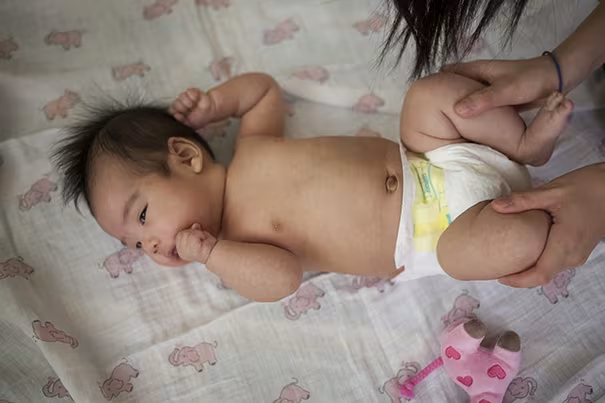
Baby constipation: baby constipation remedies
Learn the causes of baby constipation, home remedies and appropriate food at the time of infant constipation to take care of baby’s bowel movements.
Read more
Common kids illnesses: solutions and remedies
Common illnesses are normal for children of all ages and can boost immune systems. See the most common illnesses and treatments for kids.
Read more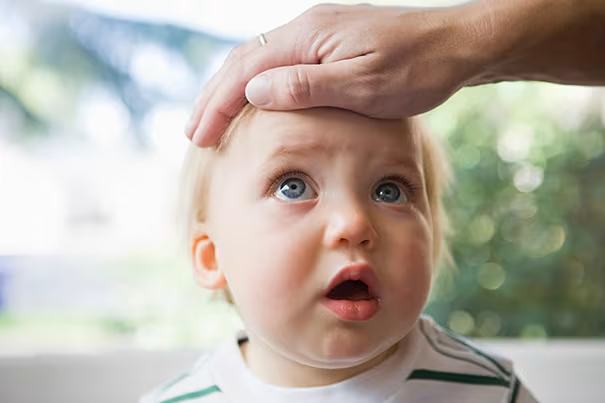
Coughs and Coughing in Babies and Toddlers
Coughs can occur for multiple reasons, learn about the types of cough, prevention, child care during coughing provided by Pampers experts.
Read moreHealth review: 9-month-old baby check-up
Find out what to expect during your baby's 9-month check-up, which is typically performed by your local general practitioner or paediatrician.
Read moreBaby constipation: baby constipation remedies
Learn the causes of baby constipation, home remedies and appropriate food at the time of infant constipation to take care of baby’s bowel movements.
Read moreCommon kids illnesses: solutions and remedies
Common illnesses are normal for children of all ages and can boost immune systems. See the most common illnesses and treatments for kids.
Read moreCoughs and Coughing in Babies and Toddlers
Coughs can occur for multiple reasons, learn about the types of cough, prevention, child care during coughing provided by Pampers experts.
Read moreHealth review: 9-month-old baby check-up
Find out what to expect during your baby's 9-month check-up, which is typically performed by your local general practitioner or paediatrician.
Read moreBaby constipation: baby constipation remedies
Learn the causes of baby constipation, home remedies and appropriate food at the time of infant constipation to take care of baby’s bowel movements.
Read moreCommon kids illnesses: solutions and remedies
Common illnesses are normal for children of all ages and can boost immune systems. See the most common illnesses and treatments for kids.
Read moreCoughs and Coughing in Babies and Toddlers
Coughs can occur for multiple reasons, learn about the types of cough, prevention, child care during coughing provided by Pampers experts.
Read more