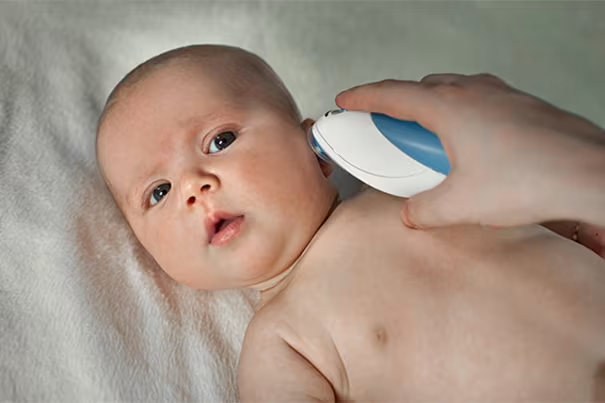
Dealing with fever in newborns and babies


A fever means that your child's body is fighting an infection. Fever by itself doesn't mean that the child is seriously ill. A low to medium fever is part of the body's defence mechanism for the usual minor illnesses of childhood.
Fever in an infant
A fever in a small infant (under 2 months of age) must be taken seriously. Rectal temperatures over 38 °C (100.4 °F) are considered elevated. It's not advisable to use an ear thermometer at this age.
What you can do
If your baby's (under 2 months of age) temperature is up, remove one layer of clothing and check his temperature again in 15 to 20 minutes. If it isn't back to normal in that time or if your baby is acting lethargic, not feeding or is extremely fussy, call your doctor.
What to tell your healthcare provider
Report whether or not your baby is eating well, easy to awaken, alert or showing any other signs of illness. Mention whether or not your baby has been exposed to any illnesses in the last week or two, and whether he has any chronic health problems.
Fever in an older baby or toddler
As a general rule, fevers over 39.4 °C (103 °F) indicate a more serious illness than fevers under 39.4 °C, but how ill the child is acting is more important than the height of the temperature.
What you can do
If your baby is over three months old, give him paracetamol to reduce the fever or discomfort if you wish. Never give a baby aspirin. Warm baths also bring down fevers in children, provided they don't get chilled and start to shiver. Shivering means that the body is actually increasing its temperature, which is the opposite of what you want. Get more such information on how to take care of your baby on Pampers AE.
What to tell your doctor
Keep a close eye on your child's temperature. If you become concerned or if he's starting to look ill, report it to your doctor.
Learn about week by week progress of your baby using pregnancy calendar to new born baby care tips, Pampers UAE is here to guide you through the amazing journey of early parenthood. Learn more about us, our baby diaper products & commitment to you.

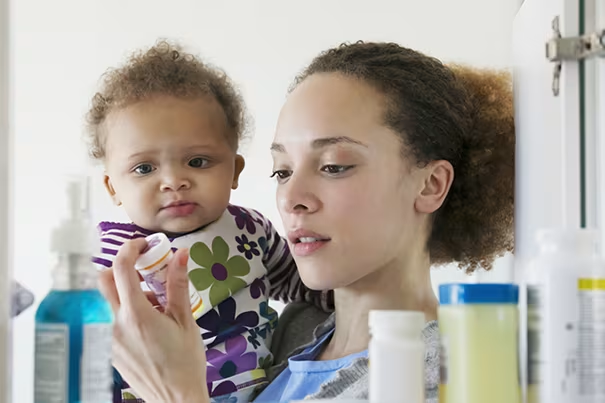
What to stock in your medicine cabinet.
Use a child safety lock to secure your medicine cabinet with all the medicines, plasters and creams that a child could possibly need.
Read more
What Is Cradle Cap and How Can I Soothe My Baby’s Skin?
It may look a little worrying, but cradle cap is a common and easily manageable condition for babies. Here’s our advice for how to soothe your little one.
Read more
What Is SIDS, and How Can I Reduce the Risk
As a new parent, it is understandable to worry about SIDS. Thankfully it is quite rare, and with these steps you can help to reduce the risk to your baby.
Read more
Common NICU Tests That You Should Know About
Your baby is likely to need a number of different tests and procedures while in the NICU, where babies undergo regular testing. There is no need to worry, and you can learn more about the tests here.
Read more
Paediatricians: Work with the health worker
Identifying the perfect paediatrician before your child's birth can help to save a lot of stress down the line. Commonly the best are found from referral.
Read more
Giving your baby and young child medicine
Giving a baby medicine should only be done under the instructions of a medical professional, commonly for issues such as baby rashes or colic.
Read moreWhat to stock in your medicine cabinet.
Use a child safety lock to secure your medicine cabinet with all the medicines, plasters and creams that a child could possibly need.
Read moreWhat Is Cradle Cap and How Can I Soothe My Baby’s Skin?
It may look a little worrying, but cradle cap is a common and easily manageable condition for babies. Here’s our advice for how to soothe your little one.
Read moreWhat Is SIDS, and How Can I Reduce the Risk
As a new parent, it is understandable to worry about SIDS. Thankfully it is quite rare, and with these steps you can help to reduce the risk to your baby.
Read moreCommon NICU Tests That You Should Know About
Your baby is likely to need a number of different tests and procedures while in the NICU, where babies undergo regular testing. There is no need to worry, and you can learn more about the tests here.
Read morePaediatricians: Work with the health worker
Identifying the perfect paediatrician before your child's birth can help to save a lot of stress down the line. Commonly the best are found from referral.
Read moreGiving your baby and young child medicine
Giving a baby medicine should only be done under the instructions of a medical professional, commonly for issues such as baby rashes or colic.
Read moreWhat to stock in your medicine cabinet.
Use a child safety lock to secure your medicine cabinet with all the medicines, plasters and creams that a child could possibly need.
Read moreWhat Is Cradle Cap and How Can I Soothe My Baby’s Skin?
It may look a little worrying, but cradle cap is a common and easily manageable condition for babies. Here’s our advice for how to soothe your little one.
Read more