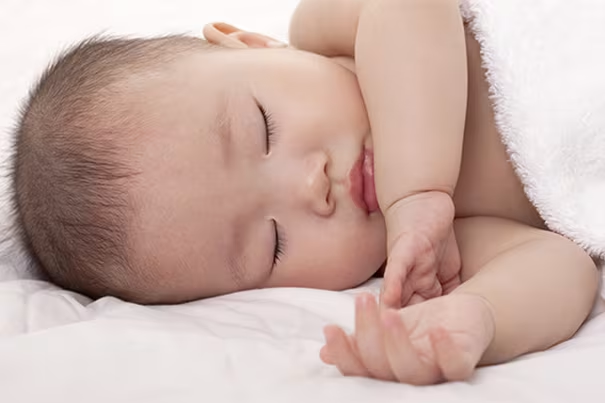
Newborn skin care: Baby eczema and dry skin


Dry skin is a universal complaint. And people who live in dry climates or have a family history of dry skin have even more reason to complain.
The facts about eczema
Also known as atopic dermatitis, eczema is often associated with dry skin; in fact, it's the most common itchy skin condition in children. It usually begins when the child is an infant, but may begin during the toddler or early school-age years. Eczema – red, scaly patches of skin that are very itchy – appears most commonly in children with a family history of eczema or other allergic reactions, including asthma and hay fever. Babies most commonly get eczema on the face, legs and arms. In toddlers or older children, it commonly shows up in the folds of the knees and elbows. The itching may be quite severe and often disturbs the sleep of affected children. Itching also serves to continue the cycle, as scratching can lead to more itchy red areas of skin, and may also result in secondary infection with bacteria or viruses.
Treating dry skin and baby eczema
Bath
The most important treatment (and preventative measure) for dry skin and eczema is keeping the skin well moisturised. Bathe your child every day in lukewarm water for no longer than 10 minutes, and follow this by applying a thick moisturiser to the moist skin.
Moisturise
Good moisturisers include greasy ointments like petroleum jelly and thick creams. The most effective creams come in tubs; if you can pour it from a bottle, it is not going to be as effective. Bathing for long periods of time can dry the skin and make things worse. Children with eczema are also often treated with topical steroid ointments, which can be prescribed by a paediatrician or dermatologist. These ointments help to decrease the inflammation and itch, and work very well when used in conjunction with moisturisers.
Using the right product
Choosing the right product for your baby is very important. The new Pampers Premium Pant comes with a wetness indicator that helps find out when your baby requires a diaper change. Its high absorption power keeps your baby dry throughout the night and the lotion with aloe vera helps moisturise your baby’s skin. The Pampers Premium Pants is super soft and helps prevent rashes and dry skin.
Other helpful strategies
For dry skin and eczema include using a humidifier in the child's bedroom, avoiding wool and synthetic fibres in clothing, and using fragrance-free detergents and soaps. Although currently there is no cure for eczema, new medications are always being researched for safety and effectiveness. What's more, approximately 60 per cent of babies outgrow eczema by their third birthday, and 85 to 90 per cent by the time they are teenagers.
Related conditions
Several related dry skin conditions can appear in patients with eczema.
Treatment for all of these conditions consists primarily of moisturising effectively. Check with your child's health provider for the best solution for your child. All of these conditions may improve as a child gets older, but at times they persist into adulthood.

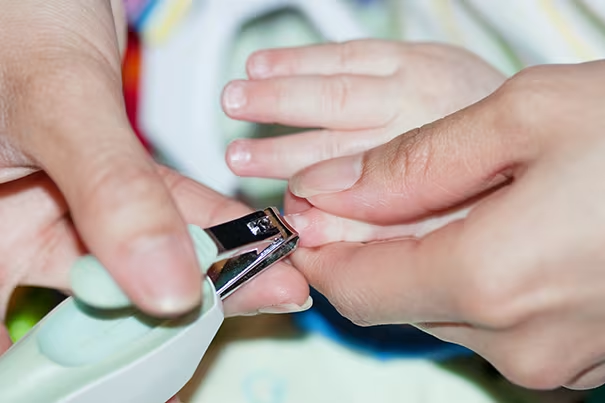
How to cut baby fingernails
Cutting your baby's fingernails for the first time can be a scary, tricky experience. Learn how to do it best with Pampers by using our online guide.
Read more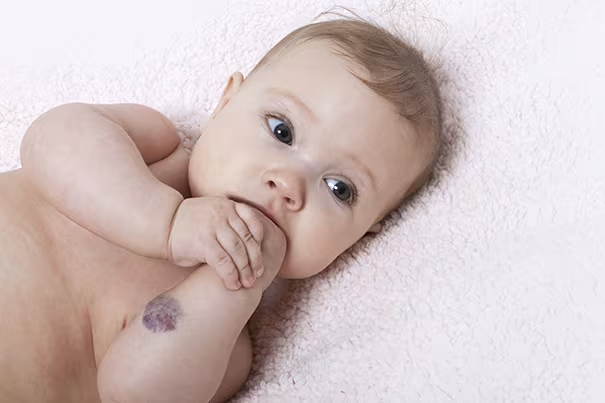
Baby birthmarks: Port-wine stain/haemangioma
Birthmarks come in all shapes, sizes and colours. Explore with Pampers the various types of birthmarks and what makes them uniquely special.
Read more
Baby Skin Care
Every baby's skin is different, and often a baby will experience problems from dry skin to eczema. Pampers explores the best skin care products.
Read more
Your Ideal Guide To Infant Massage: Benefits And More!
Infant massage is thought to help improve your baby’s well-being and promotes sleep. Here are some tips on how to massage your baby and comfort your little one.
Read more
Your baby's skin: Nappy Rash Treatment
What is diaper rash and what is the treatment for it? Read more to find out what causes diaper rash, the symptoms, and what you can do to protect your baby’s sensitive skin.
Read more
Preventing baby sunburn
Your baby’s skin is very sensitive and it needs proper care, learn how to prevent sunburn and tips to treat sunburn rashes.
Read moreHow to cut baby fingernails
Cutting your baby's fingernails for the first time can be a scary, tricky experience. Learn how to do it best with Pampers by using our online guide.
Read moreBaby birthmarks: Port-wine stain/haemangioma
Birthmarks come in all shapes, sizes and colours. Explore with Pampers the various types of birthmarks and what makes them uniquely special.
Read moreBaby Skin Care
Every baby's skin is different, and often a baby will experience problems from dry skin to eczema. Pampers explores the best skin care products.
Read moreYour Ideal Guide To Infant Massage: Benefits And More!
Infant massage is thought to help improve your baby’s well-being and promotes sleep. Here are some tips on how to massage your baby and comfort your little one.
Read moreYour baby's skin: Nappy Rash Treatment
What is diaper rash and what is the treatment for it? Read more to find out what causes diaper rash, the symptoms, and what you can do to protect your baby’s sensitive skin.
Read morePreventing baby sunburn
Your baby’s skin is very sensitive and it needs proper care, learn how to prevent sunburn and tips to treat sunburn rashes.
Read moreHow to cut baby fingernails
Cutting your baby's fingernails for the first time can be a scary, tricky experience. Learn how to do it best with Pampers by using our online guide.
Read moreBaby birthmarks: Port-wine stain/haemangioma
Birthmarks come in all shapes, sizes and colours. Explore with Pampers the various types of birthmarks and what makes them uniquely special.
Read more