
Five Breastfeeding Positions and Tips


You and your baby each have unique needs, which is why one nursing style may not fit all moms and babies. There are many different breastfeeding positions, from the cross-cradle hold to the football hold. In fact, it's a good idea to change breastfeeding positions from time to time to allow your breasts to fully empty and to prevent conditions like mastitis. Read more about the different positions, and discover some helpful breastfeeding tips.
The Cross-Cradle Hold

This is one of the best positions for your first time breastfeeding. Find a comfortable chair with arm rests, and sit up straight. Bring your baby across the front of your body, with her tummy touching yours. Hold her body in the crook of your arm, opposite the breast you're going to feed from. Use the right arm for the left breast and left arm for the right breast. Support her head with your open hand, and with the other, support your breast from the underside in a u-shaped hold. Gently guide your baby's mouth to your breast without bending over or leaning forward. You'll want to cradle her close to your breast. This is a good position if your baby is having some difficulty latching on, because it makes it easier for you to guide her head into a better position by supporting the back of her neck between your fingers and thumb.
The Cradle Hold
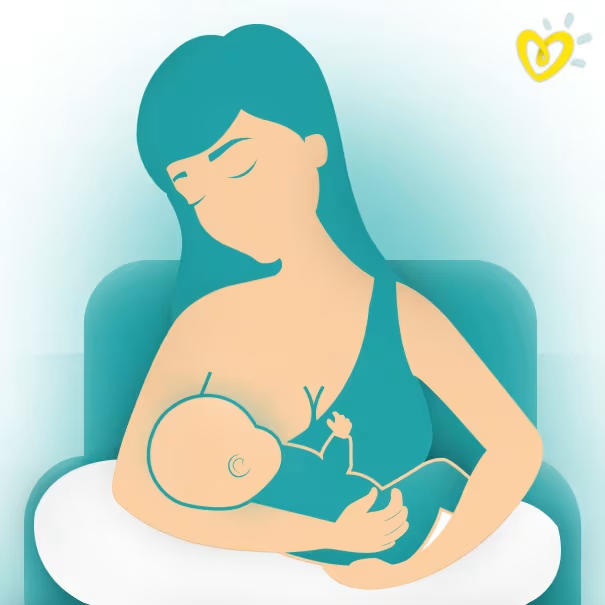
This is similar to the cross-cradle hold, but instead, you support your baby with the arm that's on the same side as the nursing breast. You should sit up straight in a comfy chair with armrests, and cradle your baby in your arm with his head comfortably resting in the crook of your elbow as he faces your breast. Make sure your baby's head is aligned with the rest of his body, and not turned to the side. You can make things comfortable with a little extra support from a pillow laid across your lap.
The Football Hold

If you're recovering from a c-section or if you have large breasts, the football hold for breastfeeding may be a comfortable position for you. It can be an easier position to maintain because it keeps your baby's weight off your abdomen. With your elbow bent, hold your baby beside you, level with your waist. Support your baby's head with an open hand, and face her toward your breast. Her back will rest on your forearm, just like you're holding a clutch bag or a football. Support your breast with your other hand in a c-shape. This is also a good position for premature babies.
The Side Lying Hold
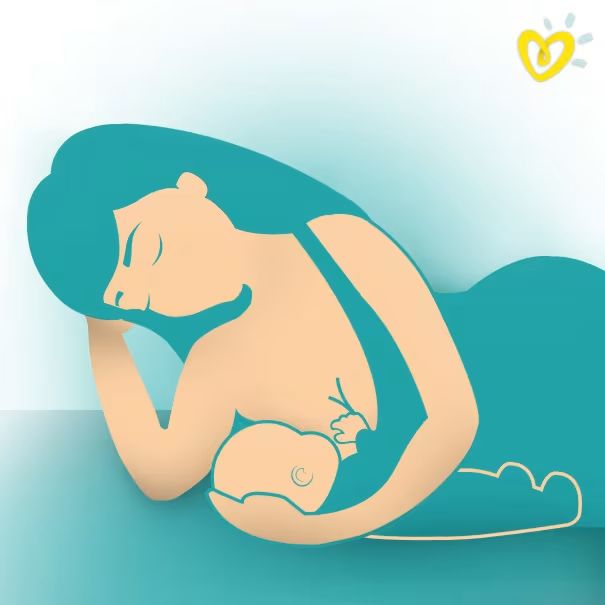
If you're feeling tired after childbirth, or if you're just generally sleepy, you can lie down to feed, but do be sure to stay awake. Nursing while lying on your side, instead of sitting, is a good option if you've had a c-section. You'll want to lie on your side, and face your baby toward your breast, making sure he's supported with one hand. Use the other hand to take your breast and touch the nipple to your baby's lips. Once he latches on, you can then use one arm to support yourself and the other to hold your baby close.
The Feeding Twins Position
If you have twins, you might want to feed them separately, but if you want to do it at the same time, you can adopt the football hold, except this time, you'll hold one baby in each arm.
Breastfeeding Positions to Avoid
Take care to avoid certain positions that can be bad for you or your baby, including:
Tips for Every Breastfeeding Position
No matter the position, you'll want to do everything you can to make yourself and your baby comfortable. Try the following:
If you have any questions about how to breastfeed or if you want to know more about breastfeeding in general, have a look at our breastfeeding FAQ. The breastfeeding experience is different for every woman, and it's OK to have a slow start. The more you feed, the easier it will get. Turn to a lactation consultant or your medical practitioner if you're worried or have questions.
Each day as a parent will have its highs and its challenges, so why not get rewarded for your hard work? Sign up for our rewards program if you haven't already, and earn gifts for both you and your baby.


FAQ: Breastfeeding
Breastfeeding is a natural process that can benefit both you and your baby, but it can be hard! Here are our answers to common breastfeeding questions.
Read more
What Is Mastitis and How Can You Treat It?
Mastitis is an infection sometimes experienced by breastfeeding mums. Here’s our expert advice on how to recognize mastitis and relieve it.
Read more
Newborn Feeding: The First feed
Find out what and how to feed a newborn baby for their first meal. Start your baby off on a healthy diet to help shape their continual development.
Read more
How to Increase Breast Milk Supply
Many new mums wonder whether they are producing enough milk for their baby. Here is some simple advice on how to monitor your breastmilk supply.
Read moreFAQ: Breastfeeding
Breastfeeding is a natural process that can benefit both you and your baby, but it can be hard! Here are our answers to common breastfeeding questions.
Read moreWhat Is Mastitis and How Can You Treat It?
Mastitis is an infection sometimes experienced by breastfeeding mums. Here’s our expert advice on how to recognize mastitis and relieve it.
Read moreNewborn Feeding: The First feed
Find out what and how to feed a newborn baby for their first meal. Start your baby off on a healthy diet to help shape their continual development.
Read moreHow to Increase Breast Milk Supply
Many new mums wonder whether they are producing enough milk for their baby. Here is some simple advice on how to monitor your breastmilk supply.
Read moreFAQ: Breastfeeding
Breastfeeding is a natural process that can benefit both you and your baby, but it can be hard! Here are our answers to common breastfeeding questions.
Read moreWhat Is Mastitis and How Can You Treat It?
Mastitis is an infection sometimes experienced by breastfeeding mums. Here’s our expert advice on how to recognize mastitis and relieve it.
Read moreNewborn Feeding: The First feed
Find out what and how to feed a newborn baby for their first meal. Start your baby off on a healthy diet to help shape their continual development.
Read moreHow to Increase Breast Milk Supply
Many new mums wonder whether they are producing enough milk for their baby. Here is some simple advice on how to monitor your breastmilk supply.
Read more