
All About Pregnancy Tests


Have you missed a period, or noticed any other signs of pregnancy? Then you may be wondering whether or not you should take a pregnancy test. Learn all about how tests work, the types available, and how accurate they are. We're here to answer your questions about pregnancy tests, so read on to learn more!
How Do Pregnancy Tests Work?
Pregnancy tests work by detecting a pregnancy hormone known as hCG, human chorionic gonadotropin, which is produced in the developing placenta after the fertilized egg implants in the uterus lining in the first few days following conception. It will continue to be produced at very high levels in the first three to four months of pregnancy. This hormone signals your body to sustain pregnancy and can be detected in your urine and blood.
What Types of Pregnancy Tests Are There?
The presence of hCG can be detected with:
How Accurate Is a Home Pregnancy Test?
Most home pregnancy tests claim to have an accuracy rate of 99 percent; however, the result you receive can depend on various factors, such as:
Can I Get a False Negative Result?
Yes, it is possible to get a negative result on your pregnancy test when you are actually pregnant. This is called a false negative. You may get a false negative if you take the test too early, if your urine is too diluted, or if you don't wait long enough for the results. Depending on the test and its instructions, you may need to wait as long as 10 minutes to get the most accurate result. Follow the instructions on your test closely and give the test time to work. You may even want to set a timer, so you don't take the reading too soon.
Can I Get a False Positive Result?
It is possible to get a false positive result on a home pregnancy test, in which case, the test shows you're pregnant when you're not. This outcome is rare, as your body won't produce hCG when you're not pregnant. However, you may get a positive result when you're not pregnant if you're on a fertility drug containing hCG.
When Should I Take a Pregnancy Test?
The best time to take a pregnancy test is a week after your missed period. You can take a test earlier, but you may not be producing enough hCG for the test to detect if you test too soon. Your body only produces hCG after the fertilized egg implants itself in the lining of your uterus, and the placenta starts to form. During early pregnancy, your hCG levels will double every two to three days, which is why it's a good idea to wait with the test. In the meantime, if you are wondering whether you're pregnant or not, you may want to look out for some early signs of pregnancy, which may include
Where Can I Get a Pregnancy Test?
You can buy home pregnancy tests at a drugstore, grocery store, and at some convenience stores.
However, you can also go to your healthcare provider, community clinic, or Planned Parenthood health center for a test.
What Do I Need to Do If the Pregnancy Test Is Positive?
Once you learn the good news, make an appointment with your healthcare provider to find out more about your pregnancy.
Congratulations! We're really excited for you.
If you want to know how far along you are during your pregnancy, you can check out our Due Date Calculator.
You can also sign up for our emails for great information about how your pregnancy develops, along with other tips and articles.

- Women’s Health: Pregnancy Tests
- Mayo Clinic: Home Pregnancy Tests: Can You Trust the Results
- Mayo Clinic: Symptoms of Pregnancy: What Happens First
- Planned Parenthood: Pregnancy Tests
- Cleveland Clinic: Home Pregnancy Test: Additional Details
- Cleveland Clinic: Your Guide to Pregnancy Tests
- ACOG: Early Pregnancy Loss
- ACOG: Early Pregnancy Lossδ

All You Need to Know About Maternal Serum Alpha-Fetoprotein (MSAFP) Test
A maternal serum alpha-fetoprotein test checks your baby’s alpha-fetoprotein levels to assess the risk of certain medical conditions. Read on to learn more.
Read more
FAQ: Amniocentesis
Amniocentesis is a way to assess many aspects of your baby's health in advance. Find out more about all the benefits and risks of this test.
Read more
Stages of Fetal Development
Learn about the stages of fetal development throughout the pregnancy. Take a peek inside the womb to see how your baby develop from week to week.
Read more
How to do Pregnancy Analysis without Device at Home?
Home pregnancy tests are not as accurate as performed by doing blood test. Home pregnancy tests are cheap & effective to find when one needs to visit a doctor.
Read more
OBGYN: finding a good obstetrician
During your pregnancy the odds are that your local doctor will recommend a visit to an OBGYN. Learn about what to expect and how to choose a gynaecologist.
Read more
Prenatal Ultrasounds
Find out more about ultrasound scans during your pregnancy. Learn about the different types, how they are performed and if is safe. Discover more today
Read more
What are 3D and 4D Ultrasound Scan?
Try a 3D or 4D ultrasound scan today to get a more detailed and closer look at your baby's development. Click here to discover more on this new technology.
Read more
Group B Strep During Pregnancy
Group B strep, also called GBS, is a type of bacteria that are found in the intestine, vagina and rectum, which can affect some moms-to-be and their newborn babies. Find out more about GBS!
Read more
Why You Might Get Acne During Pregnancy and Safe Treatment Options
You might have developed acne during your pregnancy. Find out our tips on which treatments are best to help you clear your skin and how to prevent acne.
Read more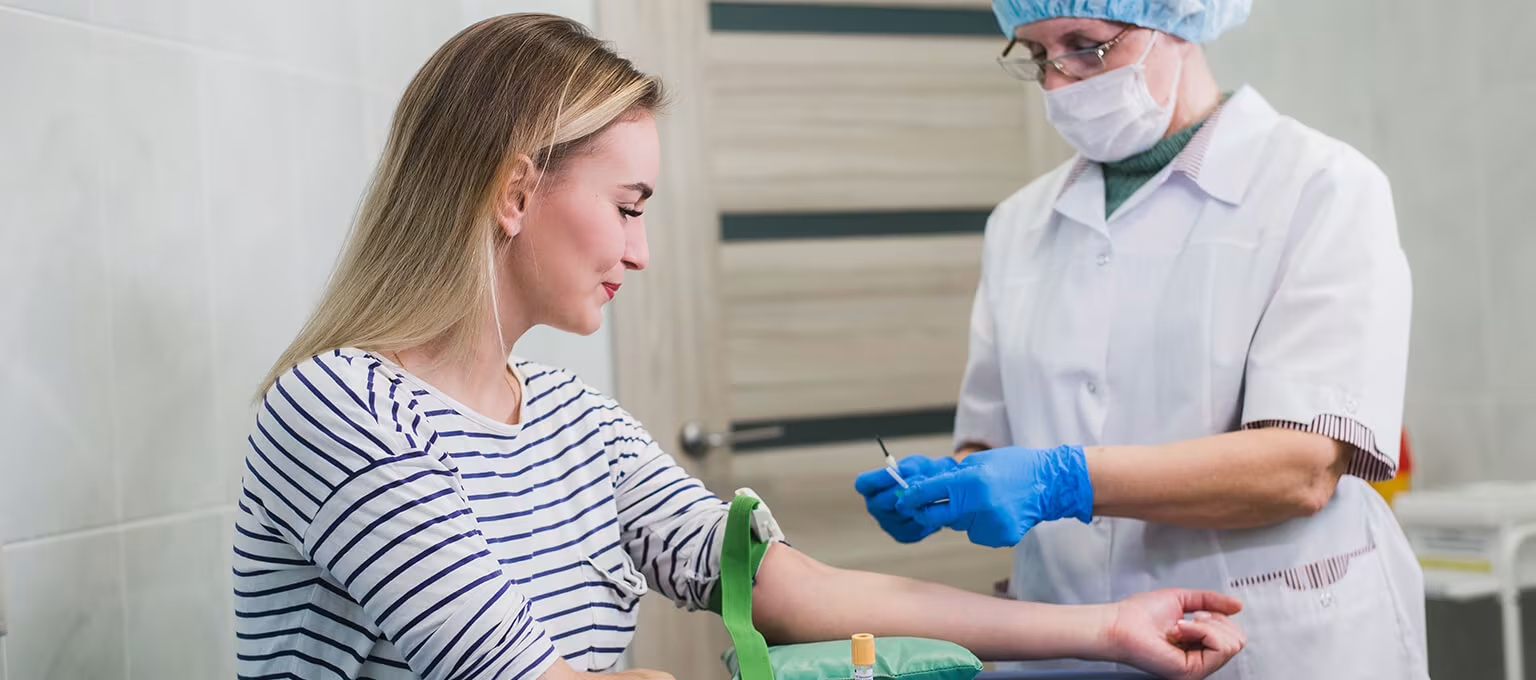
All About Glucose Screening and Tolerance Tests in Pregnancy
Glucose screening and tolerance tests are often offered when you are pregnant. Find out why they are important and what their results means.
Read moreAll You Need to Know About Maternal Serum Alpha-Fetoprotein (MSAFP) Test
A maternal serum alpha-fetoprotein test checks your baby’s alpha-fetoprotein levels to assess the risk of certain medical conditions. Read on to learn more.
Read moreFAQ: Amniocentesis
Amniocentesis is a way to assess many aspects of your baby's health in advance. Find out more about all the benefits and risks of this test.
Read moreStages of Fetal Development
Learn about the stages of fetal development throughout the pregnancy. Take a peek inside the womb to see how your baby develop from week to week.
Read moreHow to do Pregnancy Analysis without Device at Home?
Home pregnancy tests are not as accurate as performed by doing blood test. Home pregnancy tests are cheap & effective to find when one needs to visit a doctor.
Read moreOBGYN: finding a good obstetrician
During your pregnancy the odds are that your local doctor will recommend a visit to an OBGYN. Learn about what to expect and how to choose a gynaecologist.
Read morePrenatal Ultrasounds
Find out more about ultrasound scans during your pregnancy. Learn about the different types, how they are performed and if is safe. Discover more today
Read moreWhat are 3D and 4D Ultrasound Scan?
Try a 3D or 4D ultrasound scan today to get a more detailed and closer look at your baby's development. Click here to discover more on this new technology.
Read moreGroup B Strep During Pregnancy
Group B strep, also called GBS, is a type of bacteria that are found in the intestine, vagina and rectum, which can affect some moms-to-be and their newborn babies. Find out more about GBS!
Read more