6 weeks pregnant
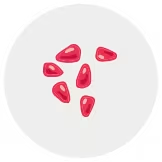
Your baby is the size of a
Yay! It has been six weeks - big changes are happening, and things have started taking shape already. At 6 weeks pregnant, your embryo has grown to the size of a pomegranate seed of about 0.08 to 0.2 inches.
Take a look at the details below to know how things are progressing inside your belly.
6 weeks Pregnant: Your Baby’s Development
Your baby at 6 weeks is developing new features. Here's a sneak peek into what's going on inside your tummy:
Important milestone
A significant milestone that occurs this week is the start of the neural tube's closing over your baby's to-be spinal cord.
That's a face!
At 6 weeks, tiny folds of tissue will now be developing into the areas that will become your baby's cheeks, chin, and jaw. The nose, mouth, and inner and outer ears have begun taking shape. Bumps are rising at places that will become the eyes and nose, and the ear structure is pushing inwards. Other tiny buds are forming that will grow into your baby's arms and legs eventually.
Heart beats like a drum
Your baby's heart tube is growing into four primitive chambers gradually. If you take an ultrasound scan this week, a tiny heartbeat of about 105 beats per minute may be detectable.
What's more
Your baby's nervous system and brain are developing quickly too. Currently, your baby's lungs are like single tubes that will form into pouch-like structures. They will continue to grow over the next few months so that your baby can take his first breath of air. The liver and kidneys have also started taking shape.
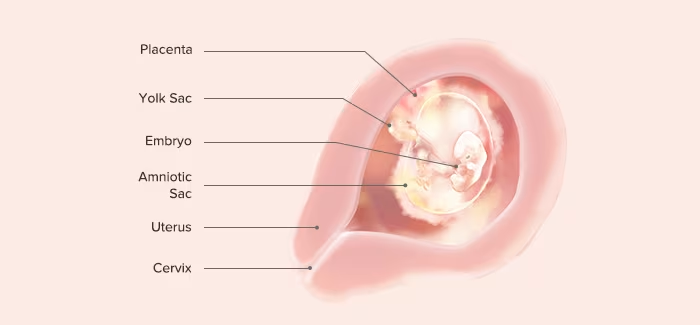
6 Weeks Pregnant: Your Symptoms
Here's a quick look into what you may be experiencing in your sixth week of pregnancy:
Spotting
Some light spotting that doesn't even cover a pantyliner is quite normal at six weeks. It is most probably implantation bleeding. However, if the spotting is heavy with a lot of blood and lasts longer than two days, talk to your doctor right away.
Cramping
Pregnancy at six weeks can begin with slight cramping. It is normal and signifies the expansion of your uterus and the surrounding tissues to make room for your baby. But, if the pain is more severe than usual period cramping, or is accompanied by a fever or diarrhoea, contact your doctor without any delay.
Morning sickness
If you have been wondering why you haven't had morning sickness yet, it may arrive this week. Although it is called morning sickness, it can happen at any time, whether morning, evening, or night. Your nausea may be triggered by certain smells, movements, an empty stomach, or nothing at all. Keep some crackers or simple starchy foods handy to soothe the queasy feeling.
Exhaustion
Pregnancy fatigue can make you feel completely exhausted, but that’s okay! It is the increasing levels of the pregnancy hormone called progesterone that's making you feel tired. You can try taking some naps, munching on little snacks, and practising some light exercises to fight off the exhaustion. Make sure you're getting enough iron, as its deficiency can lead to anaemia and cause tiredness as well.
Frequent urination
You may feel a frequent urge to go to the bathroom more than usual. This happens because your kidneys are working hard to process the extra liquid in your system.
Mood swings
Your emotions may be on a bumpy ride between now and the end of your pregnancy. Although mood swings are quite normal in the first trimester and usually subside in the second, they might return by the end of the third trimester. Talking to loved ones, napping, eating well, and practising some light exercises can help you feel a little better.
Constipation
The increasing levels of progesterone may also cause constipation, as the hormone slows down the digestive tract. Try exercising regularly, eating a balanced diet that includes high-fibre foods and drinking at least eight glasses of water a day to help ease the problem.
6 weeks pregnant: Things to Consider
Special Considerations at 6th week of Pregnancy
Although symptoms like frequent urination and spotting are normal, it is totally OK to consult your doctor if you experience any new symptom or have any concerns regarding the regular symptoms. Here are some things that you do not want to ignore:
Urinary Tract Infection
A urinary tract infection (UTI) is a bacterial infection that is quite common in pregnancy. Since the traditional symptoms of a UTI include urgency and frequency of urination, which are typical during pregnancy, you may not notice that you have an infection.
Therefore, it is essential to know other signs of UTI: burning, pain or discomfort when urinating; cloudy or foul-smelling urine; and blood or mucus in the urine. Contact your doctor to confirm if you experience any of these so that he can treat the infection with antibiotics.
Miscarriage
Miscarriage is a common concern in the first three months, due to which many expecting parents fear announcing their pregnancy. Although you may be tracking every little twinge or ache, minor cramps and slight bleeding can be perfectly normal. However, if your spotting lasts more than a day or two accompanied by heavy bleeding or painful cramps, you may want to call your doctor right away.
Precautions & Tips at 6 Weeks Pregnant
Don't skip all seafood
'Seafood is bad for expecting women' is a pregnancy myth. You don't have to give up on all seafood, but just avoid high-mercury fish like shark, tilefish, bigeye tuna, swordfish, marlin, orange roughy, and king mackerel. You can eat 200-300 gms of well-cooked shellfish, wild-caught salmon, canned light tuna, or cod a week.
Sometimes bland is good
Morning sickness can sometimes get on your nerves, especially when you are done with saltines. But worry not; you have different options – try rice cakes, dry cereal, well-toasted bread and breadsticks, and pretzels. You can stash them in the drawers of your bedside table or your handbag.
Commit to exercise
Exercising daily can be a challenge, especially if you haven't been working out before pregnancy. While you struggle every day to get your steps moving, feeling nauseous can add to it. Try blocking a specific time of your day for working out. On days when queasiness gets to you, try swapping your work out with brisk walking for about 15 minutes.
Choose healthy treats
We know you have been craving everything sweet or salty junk food but remember that there's always a healthier choice. All you need is some willpower to adjust to keep your taste buds and your baby happy. You can replace the greasy options with soy or baked chips, air-popped popcorn with some Parmesan, rice cakes, and pretzels.
For your inner chocoholic or ice-cream lover, you can try a cup of hot chocolate or some frozen yoghurt topped with fresh berries or fruits.
Pamper yourself
Thanks to your pregnancy hormones, your nails are growing quicker and stronger than ever. And it is perfectly safe to polish your nails. In the case of acrylics, although there's no proof of the chemicals harming you or your foetus, it is best to forgo the idea of acrylic nails until the baby arrives.
Just in case your hormones didn't play the role and your nails are weak or brittle, you can try a clear nail hardener and reapply often. Also, make sure you are getting enough calcium.
What to expect at the first prenatal visit
We're sure you might have booked an appointment with your doctor for the first prenatal visit. If you haven't, make sure you book it right away. This check-up is going to be exciting and long. Here's what you can expect:
Self-Care Tips
Since every expecting mother is unique, her experience of pregnancy symptoms and the way of handling them will differ from the rest. So, you have to figure out what works best for you and for that, you may have to try a few different things:
Handling fatigue
Tiredness is your body's call for rest. The best way to deal with it is to take short naps as much as you can. However, we also understand that responsibilities can prevent you from getting some extra sleep. For this, you can try to handle fatigue in ways like:
Handling frequent urination
If you have to use the bathroom frequently, it's good – it means your body is getting enough water. Staying hydrated is essential for you and your baby's health. But frequent urination can be a bit annoying, though. Here's how you can deal with it:
Handling nausea
Try taming or keeping nausea and vomiting at bay with the following tips:
Handling emotional toll
Along with unpleasant physical symptoms, there’s an emotional toll, too. While early pregnancy symptoms can be tough, you may not have much support if you haven't shared the news yet. In such cases, you can always reach out to your doctor and talk about how you feel. You can also talk to a trusted friend or family member while keeping your secret. It may help you get some tips on feeling physically better, along with some support to help you feel mentally and emotionally better.
6 Weeks Pregnant: Ask your Doctor
Your regular prenatal check-ups make for a perfect opportunity to get all your questions and concerns answered. If you haven't prepared a list yet, try it now. Here's a set of questions that might help you get started:
While you prepare some questions, make sure to prepare yourself for some Q&A that your doctor is likely to ask you at your first visit. You can make notes and jot down the points so that everything is in the same spot and easy to carry. Here's what you may want to note down before your first visit:
Although not all prenatal appointments include an ultrasound, an early ultrasound is more likely in the case of fertility medication, a history of miscarriage or ectopic pregnancy, or any concerns like severe pain or bleeding. Here's why your doctor may use an early ultrasound:
Frequently Asked Questions
Fatigue, breast tenderness, nausea, constipation, cramps are some of the common symptoms you may experience at 6 weeks pregnant.
19 Weeks Pregnant
At 19 weeks pregnant, your baby is around 18 cm in length, and may weigh between 180 and 225 grams. You’re now midway through month five. Visit now to learn more!
Read more
20 weeks pregnant
At 20 weeks pregnant, you’re halfway there and your uterus has grown to three times its original height. Learn all about your baby’s development and pregnancy diet tips & due date confirmation on Pampers AE.
Read more
21 Weeks Pregnant
At 21 weeks pregnant, you are entering month six of pregnancy and Your baby is already starting to suck his thumb. Learn all about your baby’s development and pregnancy diet tips on Pampers AE. Visit now!
Read more
23 weeks pregnant
At 23 weeks your baby will be just over 28 cm (11 inches) long and weigh over 450 g (1 lb)! Movement will have increased due to their newly acquired senses.
Read more
36 weeks pregnant
At 36 weeks pregnant, your baby has reached the length he'll be when he's born. Learn everything exciting about the baby developments and pregnancy diet tips on Pampers AE.
Read more
10 weeks pregnant
Did you know that you may be able to hear baby's heartbeat if you have doctor's visit scheduled at 10th week of pregnancy. Learn more about baby growth & pregnancy symptoms on Pampers AE. Visit now!
Read more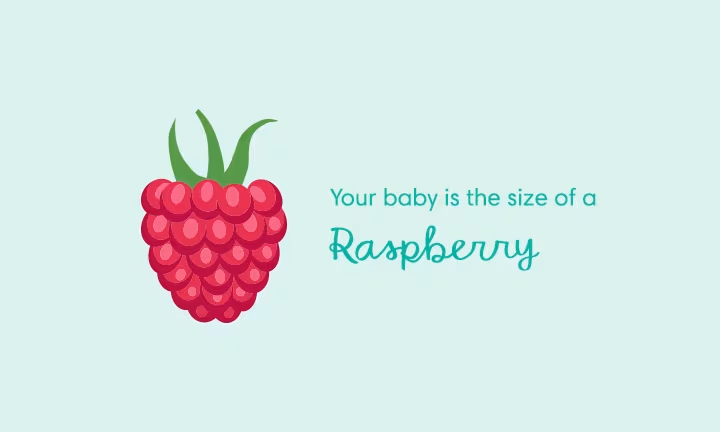
8 weeks pregnant
8th week of pregnancy is the time of prenatal care for expecting moms to ensure smooth pregnancy & healthy baby. Read more about pregnancy symptoms & baby growth at 8 weeks pregnant on Pampers AE.
Read more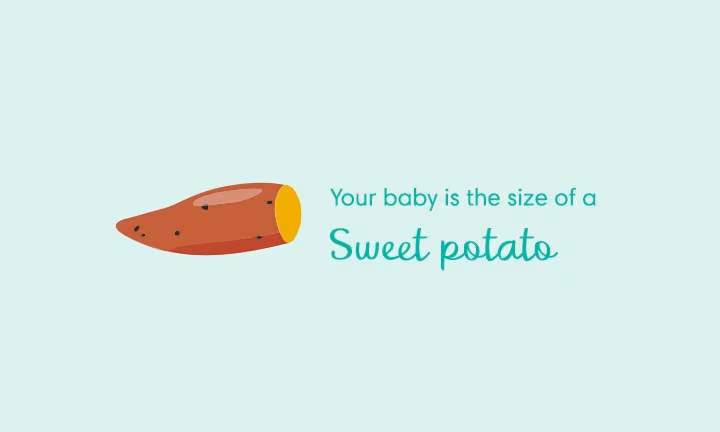
18 Weeks Pregnant
At 18 weeks pregnant, you are in month 5 of your pregnancy and your baby is around the size of a sweet potato. Learn all about your baby’s development and pregnancy diet tips on Pampers AE.
Read more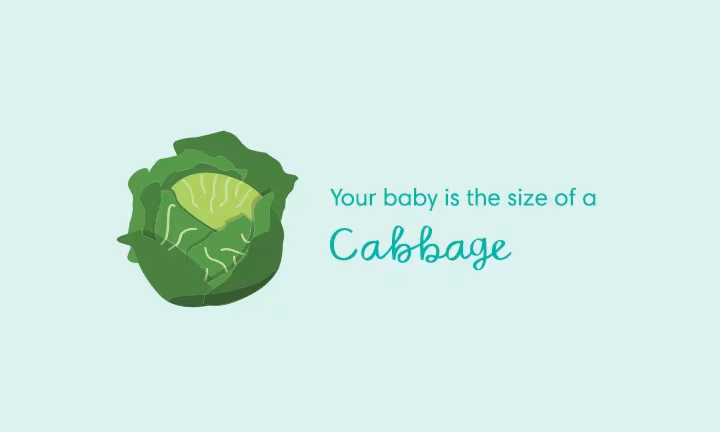
30 weeks pregnant
At 30 weeks pregnant, your baby's brain is developing incredibly. Learn everything exciting about the baby developments and pregnancy diet tips on Pampers AE.
Read more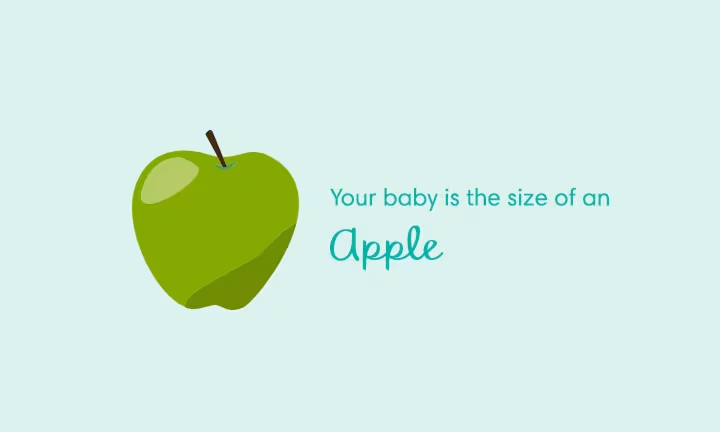
16 weeks pregnant
At 16 weeks pregnant, it's finally time to enjoy being pregnant as those bothersome symptoms of early pregnancy have probably gone and you have more energy.
Read more19 Weeks Pregnant
At 19 weeks pregnant, your baby is around 18 cm in length, and may weigh between 180 and 225 grams. You’re now midway through month five. Visit now to learn more!
Read more20 weeks pregnant
At 20 weeks pregnant, you’re halfway there and your uterus has grown to three times its original height. Learn all about your baby’s development and pregnancy diet tips & due date confirmation on Pampers AE.
Read more21 Weeks Pregnant
At 21 weeks pregnant, you are entering month six of pregnancy and Your baby is already starting to suck his thumb. Learn all about your baby’s development and pregnancy diet tips on Pampers AE. Visit now!
Read more23 weeks pregnant
At 23 weeks your baby will be just over 28 cm (11 inches) long and weigh over 450 g (1 lb)! Movement will have increased due to their newly acquired senses.
Read more36 weeks pregnant
At 36 weeks pregnant, your baby has reached the length he'll be when he's born. Learn everything exciting about the baby developments and pregnancy diet tips on Pampers AE.
Read more10 weeks pregnant
Did you know that you may be able to hear baby's heartbeat if you have doctor's visit scheduled at 10th week of pregnancy. Learn more about baby growth & pregnancy symptoms on Pampers AE. Visit now!
Read more8 weeks pregnant
8th week of pregnancy is the time of prenatal care for expecting moms to ensure smooth pregnancy & healthy baby. Read more about pregnancy symptoms & baby growth at 8 weeks pregnant on Pampers AE.
Read more18 Weeks Pregnant
At 18 weeks pregnant, you are in month 5 of your pregnancy and your baby is around the size of a sweet potato. Learn all about your baby’s development and pregnancy diet tips on Pampers AE.
Read more