
7 weeks pregnant
Your baby is the size of a
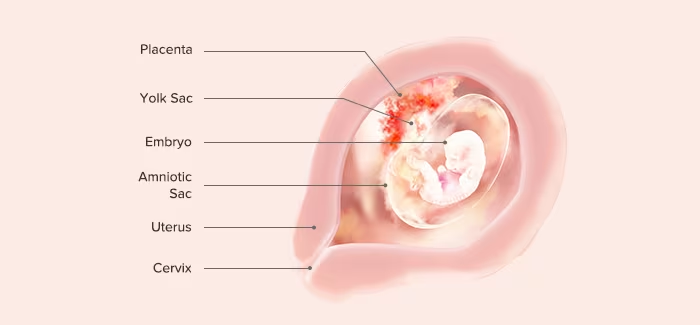
Welcome to the seventh week of pregnancy dearest mommy! A lot of changes await you this week, as your little one is growing too fast. At 7 weeks pregnant, your embryo is about the size of a small blueberry of about 0.3 inches. Read on for more information on how things are progressing within your belly this week.
7 Weeks Pregnant: Your Baby's Development
Brainy baby
Brain development continues even after birth, but the basic brain structure has already formed. Later in the upcoming weeks, your baby's brain will divide into fore-brain, mid-brain, and hind-brain. While the fore-brain is responsible for forming and retaining memories, reasoning, and problem-solving, the mid-brain relays electrical signals to the respective destinations within the brain. The hind-brain is responsible for breathing, heart rate and muscle movement.
The Baby's arms and legs start developing
Your baby is sprouting out limb buds that will grow stronger and longer, dividing into arms, shoulder segments, hands, legs, knees, and foot segments.
Kidneys are in place
Your baby's kidneys will now begin working and managing the waste, as your little one will start producing urine soon.
What's more in development
7 Weeks Pregnant Symptoms
Although some of the symptoms from the past weeks continue, here is what you may be experiencing:
We understand that these symptoms can be tiring and annoying, but just a few weeks more, and you will be in your second trimester. Many of these symptoms may subside by then, making you feel better.
Ultrasound at 7th Week of Pregnancy
Major development is happening within your belly, and you can get a glimpse of it at your 7-weeks pregnant ultrasound. You will see that your foetus has developed major organs like the liver, pancreas, and appendix. His or her ears, eyes, nose, mouth, fingers, and toes have developed.
Things to Consider at 7th Week of Pregnancy
As you near the end of the first trimester, here are certain things you must consider for a safe, healthy, and comfortable pregnancy:
7 week pregnancy belly
Although your baby bump may not be that much visible, you may want to buy a few pieces of stretchy clothes to wear. A great for staying comfortable is to wear stretchy clothes that fit you a bit loose and are made with soft and natural fabrics. Opt for the right bra size and choose underwear and clothes made from cotton or other natural materials to stay cool and comfortable.
Take vital vitamins
Ensure that you and your baby are getting the necessary nutrients. Avoid spicy and fried foods that can cause heartburn. If you're vegetarian or vegan, help balance your diet with plant-protein stand-ins like grains and legumes. Talk to your doctor about options for supplements like vitamin B12 that is found only in animal products.
Take good care of your skin
Don't be surprised to find acne on your face at this stage (thanks to the hormones!). Try keeping your skin clean and oil-free to prevent clogged pores and pimples. Wash your face with a gentle cleanser twice daily and choose oil-free makeup and skincare products to avoid clogging your pores.
Nausea and vomiting
About 70 to 80 % of expecting mothers experience normal nausea accompanied by vomiting. Although severe nausea and vomiting are very rare, they can be dangerous for an expecting mother and developing baby. Such a condition of severe nausea and vomiting is called hyperemesis gravidarum. It affects up to 2.3% of pregnancies.
In this condition, prolonged, severe nausea with uncontrollable vomiting leads to dehydration and weight loss. Typically, the symptoms appear early in pregnancy, increase around week 9, and subside by week 20. If you have any concerns about hyperemesis gravidarum, it is best to clarify it with your doctor.
Precautions & Tips at 7th Week of Pregnancy
As you near the beginning of the second trimester, here are some tips and precautions you can follow:
The right weight
You may not look pregnant, as your baby bump isn't out yet. However, you may have put on some weight, and that’s okay! Doctors suggest that women with an average BMI of 18.5-24.9 should gain about 11 to 16 kgs during pregnancy. If you're experiencing morning sickness, chances are that you might not gain any weight, or you might have lost a little. It is fine! Your appetite will pick up, and you can make up for those kgs in your second trimester.
Cramping is usually normal
Although cramping is normal during the first trimester, if it is accompanied by shoulder or neck pain, contractions, dizziness, or discharge, call your doctor right away.
Manage skin problems safely
Thanks to the pregnancy hormones, you may experience some pretty wacky complexion complexities –from acne to blotchiness, from excessive oiliness to excessive dryness or both at the same time, or a patchy skin discolouration called chloasma.
Wash your face thoroughly two to three times a day with a gentle cleanser. Also, gently exfoliate once a week and use an oil-free moisturiser after it.
Workout no-no’s
If you have been working out, here are some don'ts to keep in mind:
Eat a lot of fruits and vegetables
Fruits and vegetables brighter in colour on the inside are more nutritious than the brighter ones on the outside. For example, the melon may be pale on the outside compared to a bright red apple, but the deeply-hued flesh of the melon contains vitamins A and C and other nutrients more than the white-fleshed apple. So, choose your fruits and vegetables with brighter colours on the inside when shopping to get enough nutrients.
Give into healthy cravings
If you're craving fruits or vegetables, you can give in easily. However, what about food that isn't that nutritious? Resist your cravings if they're pulling you toward a bowl of sugar-frosted cereal or kettle-cooked potato chips. Instead, eat crackers or cheerios topped with fresh fruit with a drizzle of honey, or attack a bag of soy chips. If your heart calls out to food that you shouldn't be having in your pregnancy, substitute it with something close to it. Contact your doctor if you crave anything that isn't food - clay, ashes, laundry starch or chalk.
Cater to your aversions
Keep your food choices bland and boring and try substitutes for foods that you can't stand. For example, you can't stand veggies, try fruit with the same nutritional benefits.
Manage constipation
Ease the bloating and discomfort by drinking plenty of water, exercising a little, and eating more insoluble fibre - whole wheat, flax, fruit with skins, vegetables, brown rice, and lentils.
Ask Your Doctor
In the first two trimesters, your prenatal visits will be scheduled about once a month. You can expect them to become more frequent in the last two months of your pregnancy. Prenatal check-ups provide you with the perfect opportunity to bring up concerns and ask questions to your doctor. Here are some of the questions that might help you make up your list:
Remember it's totally normal to feel what you're feeling during pregnancy, and it's always okay to call your doctor to clarify any doubts and concerns. As you bid goodbye to week 7, know that week 8 awaits you with new surprises about your baby's development.
Frequently Asked Questions
Toxoplasmosis is an infection passed through cat faeces and raw or undercooked meat. Although this infection can't affect you much unless you have a weakened immune system, it could be dangerous to your baby.
Make sure the meat you prepare, or order is cooked well. Wash your hands thoroughly before and after preparing meat and avoid the kitty litter duty throughout your pregnancy.
19 Weeks Pregnant
At 19 weeks pregnant, your baby is around 18 cm in length, and may weigh between 180 and 225 grams. You’re now midway through month five. Visit now to learn more!
Read more
20 weeks pregnant
At 20 weeks pregnant, you’re halfway there and your uterus has grown to three times its original height. Learn all about your baby’s development and pregnancy diet tips & due date confirmation on Pampers AE.
Read more
21 Weeks Pregnant
At 21 weeks pregnant, you are entering month six of pregnancy and Your baby is already starting to suck his thumb. Learn all about your baby’s development and pregnancy diet tips on Pampers AE. Visit now!
Read more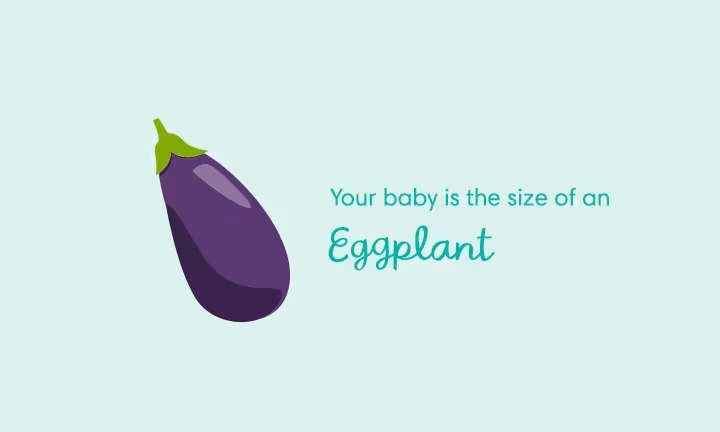
23 weeks pregnant
At 23 weeks your baby will be just over 28 cm (11 inches) long and weigh over 450 g (1 lb)! Movement will have increased due to their newly acquired senses.
Read more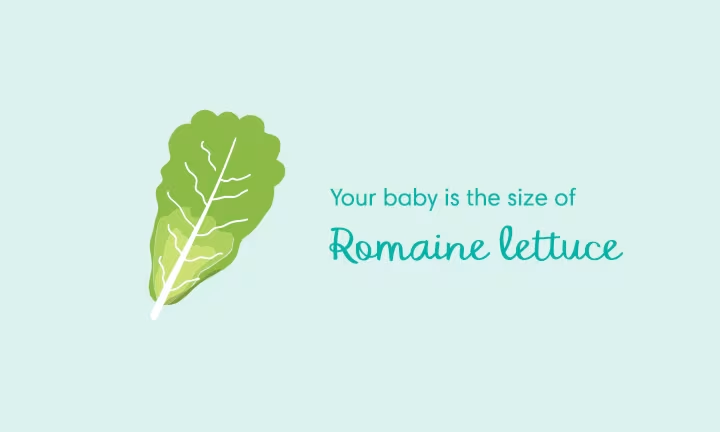
36 weeks pregnant
At 36 weeks pregnant, your baby has reached the length he'll be when he's born. Learn everything exciting about the baby developments and pregnancy diet tips on Pampers AE.
Read more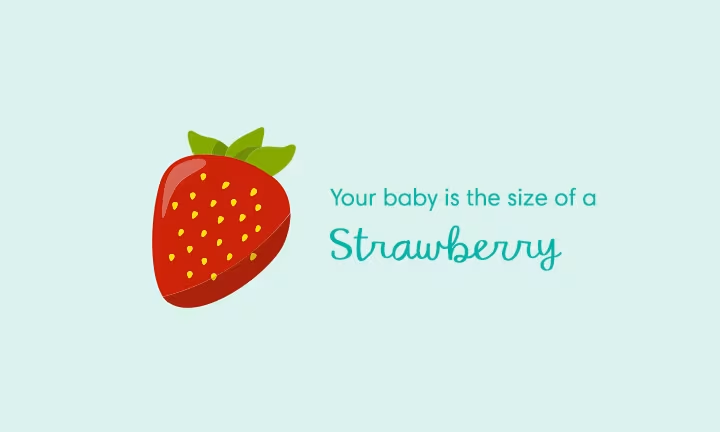
10 weeks pregnant
Did you know that you may be able to hear baby's heartbeat if you have doctor's visit scheduled at 10th week of pregnancy. Learn more about baby growth & pregnancy symptoms on Pampers AE. Visit now!
Read more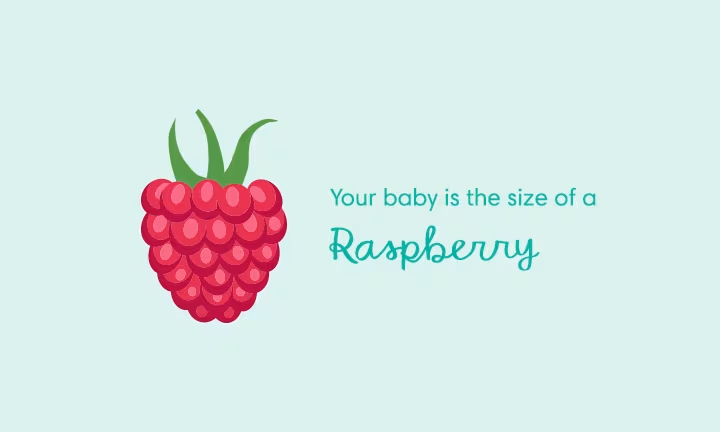
8 weeks pregnant
8th week of pregnancy is the time of prenatal care for expecting moms to ensure smooth pregnancy & healthy baby. Read more about pregnancy symptoms & baby growth at 8 weeks pregnant on Pampers AE.
Read more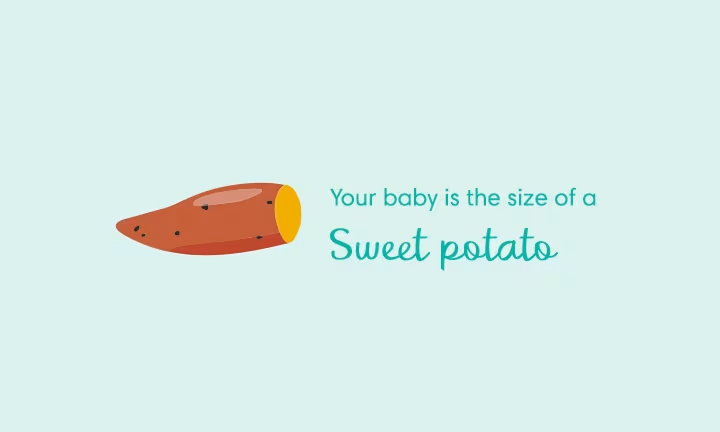
18 Weeks Pregnant
At 18 weeks pregnant, you are in month 5 of your pregnancy and your baby is around the size of a sweet potato. Learn all about your baby’s development and pregnancy diet tips on Pampers AE.
Read more
16 weeks pregnant
At 16 weeks pregnant, it's finally time to enjoy being pregnant as those bothersome symptoms of early pregnancy have probably gone and you have more energy.
Read more
30 weeks pregnant
At 30 weeks pregnant, your baby's brain is developing incredibly. Learn everything exciting about the baby developments and pregnancy diet tips on Pampers AE.
Read more19 Weeks Pregnant
At 19 weeks pregnant, your baby is around 18 cm in length, and may weigh between 180 and 225 grams. You’re now midway through month five. Visit now to learn more!
Read more20 weeks pregnant
At 20 weeks pregnant, you’re halfway there and your uterus has grown to three times its original height. Learn all about your baby’s development and pregnancy diet tips & due date confirmation on Pampers AE.
Read more21 Weeks Pregnant
At 21 weeks pregnant, you are entering month six of pregnancy and Your baby is already starting to suck his thumb. Learn all about your baby’s development and pregnancy diet tips on Pampers AE. Visit now!
Read more23 weeks pregnant
At 23 weeks your baby will be just over 28 cm (11 inches) long and weigh over 450 g (1 lb)! Movement will have increased due to their newly acquired senses.
Read more36 weeks pregnant
At 36 weeks pregnant, your baby has reached the length he'll be when he's born. Learn everything exciting about the baby developments and pregnancy diet tips on Pampers AE.
Read more10 weeks pregnant
Did you know that you may be able to hear baby's heartbeat if you have doctor's visit scheduled at 10th week of pregnancy. Learn more about baby growth & pregnancy symptoms on Pampers AE. Visit now!
Read more8 weeks pregnant
8th week of pregnancy is the time of prenatal care for expecting moms to ensure smooth pregnancy & healthy baby. Read more about pregnancy symptoms & baby growth at 8 weeks pregnant on Pampers AE.
Read more18 Weeks Pregnant
At 18 weeks pregnant, you are in month 5 of your pregnancy and your baby is around the size of a sweet potato. Learn all about your baby’s development and pregnancy diet tips on Pampers AE.
Read more